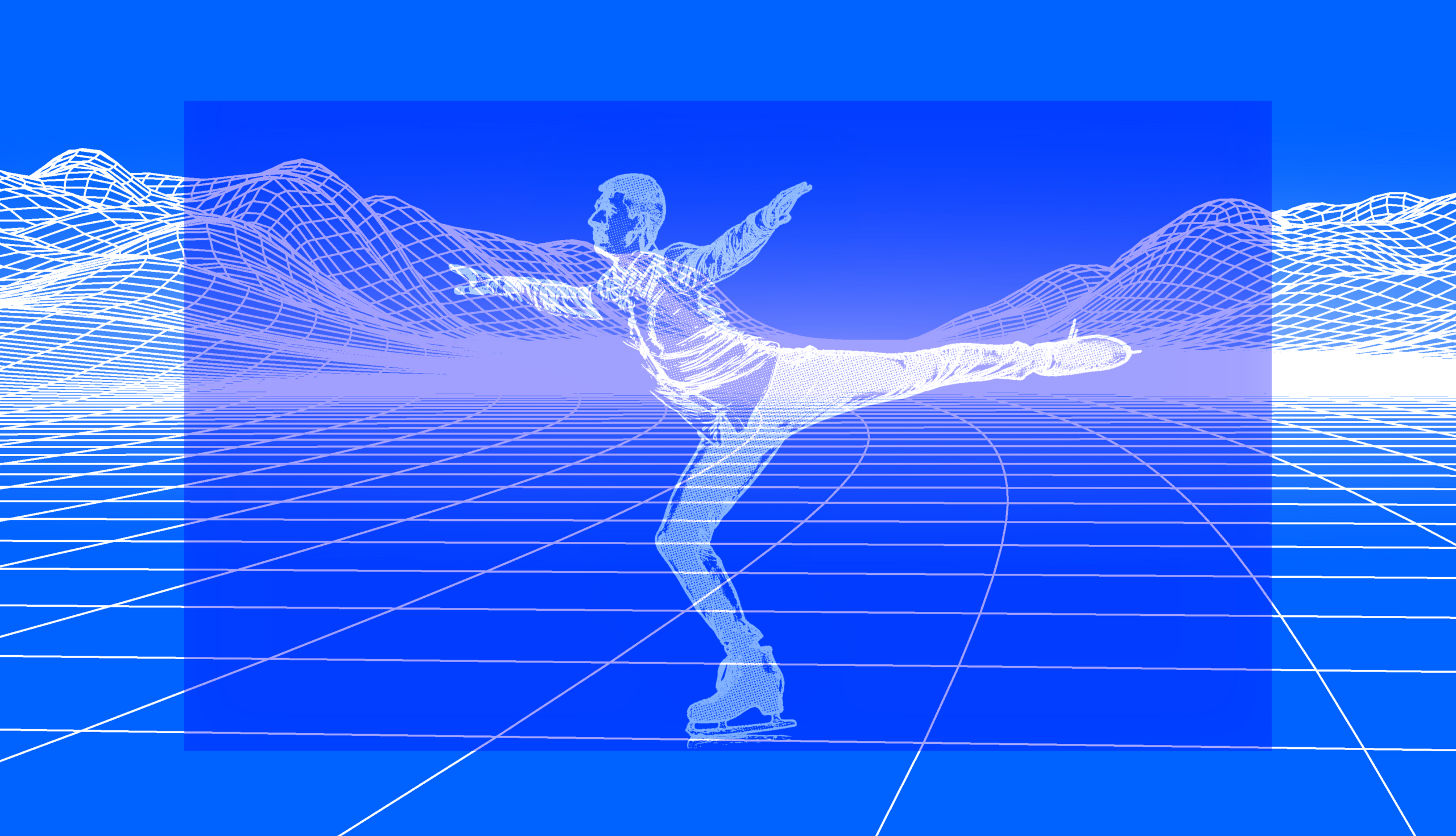
Olympic figure skating has mesmerized me this past week. The gravity defying jumps and lifts, the poetry of connection between partners, the graceful flow of movement across the ice, the high speeds, precision, and artistry. Amidst the spirals, swizzles, and multiple-rotation jumps in the air I am captivated by a seemingly simple component that only comes to mind when it fails – balance.
I’ve also been catching up on brain research regarding the same. Researchers continue to develop a better understanding of the way in which balance intertwines with our ability to accurately perceive and navigate space, allowing us to safely find our way in everyday spaces – as well as more challenging ones.
That is, the interweaving of balance, spatial awareness, and movement control beautifully evident among Olympians as they navigate skating routines, ski slaloms, and snowboarding halfpipes, relies on the same underlying neural systems that keep us coordinated and stable on our feet as we move through the more pedestrian routines of daily life.
Life on two feet necessitates of-a-piece perception of the parameters of our own body in relationship to itself, of gravitational vertical and our ever changing relationship to it as we move, and of the space through which we move – all in the course of taking action and remembering the where and why of what we’re doing.
Researchers are uncovering the interconnected neural systems that allow us to simultaneously accomplish all of this. It includes integrated mapping of the body not just relative to itself but in relationship to the space around us. What emerges is our “bodily sense of self,” inclusive of the space we occupy and our relationship to gravity.
This is the perception side of things in which multiple senses, including the felt sense of the body (proprioception), inner ear motion perception (vestibular), vision, as well as touch and hearing come together to inform our bodily self-consciousness. It is part and parcel of the neural decision-making essential to both balance control and spatial navigation.
Athletes describe mental focus – awareness in the moment – as essential to being at their best. Awareness improves perception, which in turn improves performance. A series of falls in a skating routine are often attributed to distracted focus – the mind is elsewhere, not fully attending to the task at hand. Ilia Malinin, the figure skating gold medal hopeful who fell twice in his final performance, described “thoughts and memories flooding through” his mind right before starting his routine. In contrast, Elena Meyers Taylor when asked what was on her mind during her gold medal bobsled run spoke about being completely in the moment.
These athletes’ astounding physical feats rely on the clarity of the integrated perception of the whole body in balance/motion/space – in-the-moment awareness of the bodily sense of self. The take-away for everyday balance while navigating ordinary spaces is that awareness improves the multi-sensory perception essential for stable, coordinated movement. While it may be obvious that the balance challenges inherent in Olympic sports require attentional focus, the internal balance challenges created by wear-and-tear from living multiple decades do the same. That’s what “minding” balance is all about – meeting the challenge with intentional awareness. For tips on how to improve awareness for better balance in everyday movement check out other Minding Your Balance™ blogs and videos at Minding Your Balance™ on YouTube.